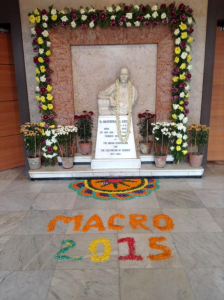
Polymer Process Engineering ’15

The Polymer and Biomaterials Chemistry Laboratories will be represented next week at the UK-China AMRI research workshop by both a talk by Professor Stephen Rimmer ‘Biofunctional branched polymers incorporated in semi-interpenetrating hydrogels’ and posters by members of his group.

This is a 3 day conference from the 8-10th of September at the University of Bradford at the Polymer IRC Laboratories conference suite. You can find out more about the conference here
Paper: Arginine-Glycine-Aspartic acid Functional Branched Semi-Interpenetrating Hydrogels

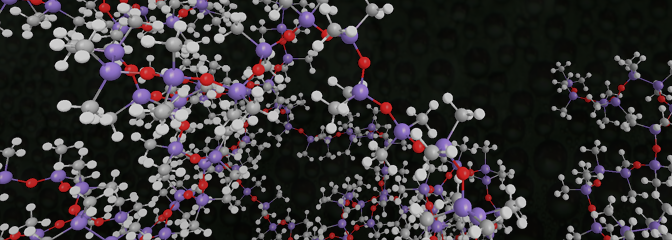
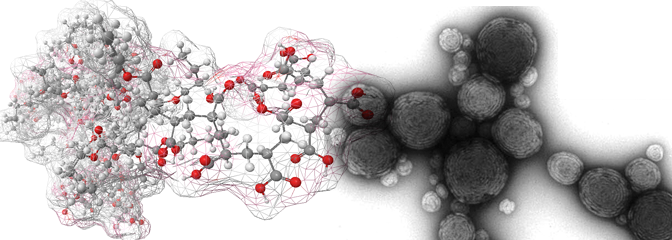
Announced today the Royal Society of Chemistry have accepted another manuscript by Richard Plenderleith, Chris Pateman, C Rodenburg, John Haycock, Fredereick Clayssens, Chris Sammon and Stephen Rimmer. Titled ‘Arginine-Glycine-Aspartic acid Functional Branched Semi-Interpenetrating Hydrogels’ it shows manufacturable cell-adhesive materials formed from semi-interpenetrating networks.

Read more →

Dr Laura Kelly

Controlling angiogenesis by delivery of vascular endothelial growth factor and platelet derived growth factor

An EPSRC funded Doctoral Training Center for Tissue Engineering and Regenerative Medice PhD supervised by Prof Stephen Rimmer, Prof Sheila Mac Neil and Dr Paul Genever [2011-2015]

Read more →

Measuring poly(acrylamide) flocculants in fresh water using inter-polymer complex formation

Measuring poly(acrylamide) flocculants in fresh water using inter-polymer complex formation

Announced today the Royal Society of Chemistry have accepted another manuscript by Thomas Swift, Linda Swanson, Andrew Bretherick (from SNF (UK) Ltd) and Stephen Rimmer. Titled ‘Measuring poly(acrylamide) flocculants in fresh water using inter-polymer complex formation’ this follows our recent communication about the use of fluorescence PAA as a polymer probe and demonstrates it’s use in several industrial fresh water flocculation plants around the UK.

Read more →

Macro 2015

MacroThe Rimmer group is proud to be presenting at the Indian Macro 2015 conference in Kolkata this year. Professor Stephen Rimmer is presenting an invited lecture entitled ‘Highly branched stimulus responsive polymers’ and Thomas Swift will be presenting an oral lecture ‘Polymers as Probes: Synthesis and Design of Polymer Probes for Fresh Water Applications’ in which he previews work currently under review with the RSC for imminent publication.

RSC BIOMATERIALS CHEMISTRY SPECIAL INTEREST GROUP

In the new year the Rimmer group will be attending the RSC Biomaterials Special Interest Group [link here] which is being held this year at King’s College, London.

Regular attendees at this event we will be presenting a range of posters showing recent research from Sheffield University and there will be a 15 minute presentation by Thomas Swift entitled ‘Bacteria Binding by a Fluorescent Polymer Probe’ which ties together research presented in our latest highly branched polymer paper with previous bacteria binding systems published over the last five years.

Poly(acrylic acid) Interpolymer Complexation: Use of a Fluorescence Time Resolved Anisotropy as a Poly(acrylamide) Probe

Poly(acrylic acid) Interpolymer Complexation: Use of a Fluorescence Time Resolved Anisotropy as a Poly(acrylamide) Probe

Today we have heard another manuscript has just been accepted by RSC Advances, written by Dr. Thomas Swift, Dr. Linda Swanson and Professor Stephen Rimmer, titled “Poly(acrylic acid) Interpolymer Complexation: Use of a Fluorescence Time Resolved Anisotropy as a Poly(acrylamide) Probe.” The paper outlines novel use of time-resolved anisotropy as a sensing technique, determining ppm concentrations of poly(acrylamide) in aqueous solutions.

Read more →