Our recent publications will be listed here, however you can see our most recent work summarised in our news feed here.
2025
- Using time-of-flight secondary ion mass spectroscopy to investigate the reaction of alkylsulfate and alkylethoxysulfate surfactants with keratin
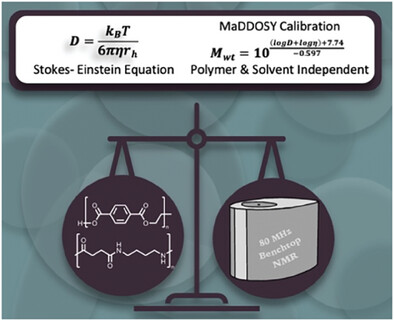
March 25 - Overcoming ‘Diffusion Limits’ – Principles Required to Measure High Molar Mass Polymers by Diffusion Ordered NMR
March 25
2024
- Formulation, Characterisation, and Biocompatibility Assessment of Rifampicin-Loaded Poly(d,l-lactide-co-glycolide) Composites for Local Treatment of Orthopaedic and Wound Infections
November 24 - Photophysical, Thermal and Imaging Studies on Vancomycin Functional Branched Poly(N-isopropyl acrylamide) of Differing Degrees of Branching Containing Nile Red for Detection of Gram-Positive Bacteria
October 24 - Comparative Analysis of Cytotoxicity Assays, from Traditional to Modern Approaches
October 24 - Polymer Conformation Determination by NMR Spectroscopy: Comparative Diffusion Ordered 1H-NMR Spectroscopy of Poly(2-Ethyl-2-Oxazoline)s and Poly(Ethylene Glycol) in D2O
July 24 - A Method for Estimation of Plasma Protein Binding Using Diffusion Ordered NMR Spectroscopy (DOSY)
June 24 - Oligo(styryl)benzenes liposomal AIE-Dots for bioimaging and phototherapy in an in vitro model of prostate cancer
May 24 - Real-Time Determination of Molecular Weight: Use of MaDDOSY (Mass Determination Diffusion Ordered Spectroscopy) to Monitor the Progress of Polymerization Reactions
May 24 - Design and Modelling of an Induction Heating Coil to Investigate the Thermal Response of Magnetic Nanoparticles for Hyperthermia Applications
April 24
Insight into the Liposomal Encapsulation of Mono and Bis-Naphthalimides
March 24 - MaDDOSY (Mass Determination Diffusion Ordered Spectroscopy) using an 80 MHz Bench Top NMR for the Rapid Determination of Polymer and Macromolecular Molecular Weight
Jan 24
2023
- Functional magnetic nanoparticles for protein delivery applications: understanding protein–nanoparticle interactions
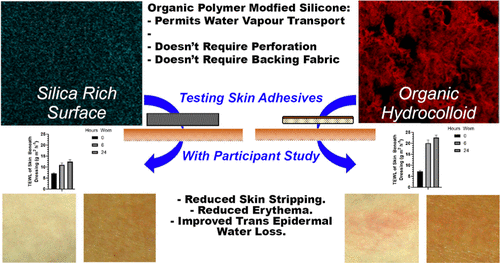
Dec 23 - Evaluating the Irritant Factors of Silicone and Hydrocolloid Skin Contact Adhesives Using Trans-Epidermal Water Loss, Protein Stripping, Erythema, and Ease of Removal
Dec 23
- Supramolecular chemistry enables vat photopolymerization 3D printing of novel water-soluble tablets
Aug 23 - P15 Surface engineering of novel polydimethylsiloxane composites to attract bacteria: potential to treat chronic infected wounds and reduce antimicrobial resistance
July 23
Creating 3D Objects with Integrated Electronics via Multiphoton Fabrication In Vitro and In Vivo
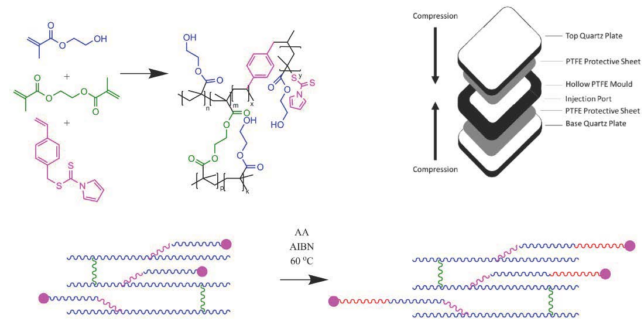
March 23 - Chain-Extendable Crosslinked Hydrogels Using Branching RAFT Modification
March 23
- Stabilisation of acrylic latexes containing silica nanoparticles for dirt repellent coating applications
March 23 - Investigation into the development of novel lanthanide-based luminescent colorants for application to textiles and paper materials
Feb 23 - Peristomal Skin Complications: New Materials Needed to Ease the Ostomy Care Market
Jan 23 - Second Order Phase Transition and Stabilizing CH···H and CH···S Interactions in Naphthyl End-Capped Bithiophene at 3.5 GPa
Jan 23
2022
- Interfacial Cocrystallization Using Oily Phase via Liquid–Liquid Phase Separation
Sep 2022 - Nanostructuring with Surfactants: The Self-Assembly of a New Poly(thiophene-phenylene) Conjugated Polymer Bearing Azacrown Ether Pendant Groups
Sep 2022 - Zirconium-Based MOFs and Their Biodegradable Polymer Composites for Controlled and Sustainable Delivery of Herbicides
July 2022 - Fluorescence spectroscopy analysis of fly ash removal from aqueous systems: adsorption of alginate to silica and alumina†
July 2022 - Generation and use of functionalised hydrogels that can rapidly sample infected surfaces
April 2022 - Evaluation of ligand modified poly (N-Isopropyl acrylamide) hydrogel for etiological diagnosis of corneal infection
Jan 2022
2021
- Development of a novel micro-bead force spectroscopy approach to measure the ability of a thermo-active polymer to remove bacteria from a corneal model
July 2021 - Synthesis of poly(vinyl ether)s by chain-end capping with a silyl ketene acetal in ab initio cationic polymerisations
June 2021
Chain end modifications of poly(vinyl ethers) - Semi-interpenetrating Polyurethane Network Foams Containing Highly Branched Poly(N-isopropyl acrylamide) with Vancomycin Functionality
April 2021
Here we incorporate our bacterial diagnostic polymers into polyurethane wound dressings and show their viability as diagnostic sensors - Label-Free Electrochemical Sensor for Rapid Bacterial Pathogen Detection Using Vancomycin-Modified Highly Branched Polymers
March 2021
Here, we have successfully combined a new class of non-biological binder molecules with electrochemical impedance spectroscopy (EIS)-based sensor detection for direct, label-free detection of Gram-positive bacteria. - Branched amphotericin functional poly (N-isopropyl acrylamide): an antifungal polymer
January 2021
Branched poly(N–isopropylacrylamide) was functionalized with Amphotericin B (AmB) at the chain ends to produce an antifungal material.
2020
- Förster Resonance Energy Transfer in Fluorophore Labeled Poly(2-ethyl-2-oxazoline)s
September, 2020
Dye-functionalized polymers have been extensively studied to understand polymer chain dynamics, intra or inter-molecular association and conformational changes as well as in practical applications such as signal amplification in diagnostic tests and light-harvesting antennas. - Effect of polymerisation by microwave on the physical properties of molecularly imprinted polymers (MIPs) specific for caffeine
August 27th, 2020
Molecularly Imprinted Polymers (MIPs) are a class of polymeric materials that exhibit highly specific recognition properties towards a chosen target. - Developments in silicone technology for use in stoma care
March 26, 2020
Soft silicone’s flexibility, adhesive capacity and non-toxic, non-odourous and hypoallergenic nature have made it an established material for adhesive and protective therapeutic devices. - Fluorescence Spectroscopy Analysis of the Bacteria–Mineral Interface: Adsorption of Lipopolysaccharides to Silica and Alumina
January 19, 2020
We present here a quantification of the sorption process and molecular conformation involved in the attachment of bacterial cell wall lipopolysaccharides (LPSs), extracted from Escherichia coli, to silica (SiO2) and alumina (Al2O3) particles.
2019
- Osteoinduction of 3D printed particulate and short-fibre reinforced composites produced using PLLA and Apatite-Wollastonite
November 11, 2019
Composites have clinical application for their ability to mimic the hierarchical structure of human tissues.
- Highly branched poly(N-isopropyl acrylamide) functionalized with an inducer molecule suppresses quorum sensing in Chromobacterium violaceum
July 30, 2019
Bacterial quorum sensing has been implicated in a number of pathogenic bacterial processes, such as biofilm formation, making it a crucial target for developing materials with a novel antibiotic mode of action.
- Short phosphate glass fiber – PLLA composite to promote bone mineralization
July 1, 2019
The clinical application of composites seeks to exploit the mechanical and chemical properties of materials which make up the composite, and in researching polymer composites for biomedical applications the aim is usually to enhance the bioactivity of the polymer, while maintaining the mechanical properties.
- Highly-branched poly(N-isopropyl acrylamide) functionalised with pendant Nile red and chain end vancomycin for the detection of Gram-positive bacteria
January 31, 2019
This study shows how highly branched poly(N-isopropyl acrylamide) (HB-PNIPAM) with a chain pendant solvatochromic dye (Nile red) could provide a fluorescence signal, as end groups bind to bacteria and chain segments become desolvated, indicating the presence of bacteria.
- A muscle mimetic polyelectrolyte–nanoclay organic–inorganic hybrid hydrogel: its self-healing, shape-memory and actuation properties
January 28, 2019
In this investigation, we report a non-covalent (ionic interlocking and hydrogen bonding) strategy of self-healing in a covalently crosslinked organic–inorganic hybrid nanocomposite hydrogel, with specific emphasis on tuning its properties fitting into a muscle mimetic material.
2018
- Highly-ordered onion micelles made from amphiphilic highly-branched copolymers
November 12, 2018
Uniform onion micelles formed from up to ten nano-structured polymer layers were produced by the aqueous self-assembly of highly-branched copolymers.
- Antibiotic functionalised polymers reduce bacterial biofilm and bioburden in a simulated infection of the cornea
June 8, 2018
Microbial keratitis can arise from penetrating injuries to the cornea.
- Segmental Mobility Studies of Poly(N‐isopropyl acrylamide) Interactions with Gold Nanoparticles and Its Use as a Thermally Driven Trapping System
May 4, 2018
Thermal desolvation of poly(N‐isopropylacrylamide) (PNIPAM) in the presence of a low concentration of gold nanoparticles incorporates the nanoparticles resulting in suspended aggregates.
- A self-healable fluorescence active hydrogel based on ionic block copolymers prepared via ring opening polymerization and xanthate mediated RAFT polymerization
February 12, 2018
In this work we report a facile method to prepare a fluorescence active self-healable hydrogel via incorporation of fluorescence responsive ionic block copolymers (BCPs).
- Temperature-dependent structure and dynamics of highly-branched poly(N-isopropylacrylamide) in aqueous solution
February 6, 2018
Small-angle neutron scattering (SANS) and neutron spin-echo (NSE) have been used to investigate the temperature-dependent solution behaviour of highly-branched poly(N-isopropylacrylamide) (HB-PNIPAM).
2017
- Poly(acrylic acid) Interpolymer Complexes
November 3, 2017
Interpolymer complex formation of poly(acrylic acid) with other macromolecules can occur via several mechanisms that vary depending on the pH.
- Pseudo electron-deficient organometallics: limited reactivity towards electron-donating ligands
September 22, 2017
Half-sandwich metal complexes are of considerable interest in medicinal, material, and nanomaterial chemistry.
- Binding of bacteria to poly (N-isopropylacrylamide) modified with vancomycin: Comparison of behavior of linear and highly branched polymers
July 21, 2017
The behavior of a linear copolymer of N-isopropyl acrylamide with pendant vancomycin functionality was compared to an analogous highly branched copolymer with vancomycin functionality at the chain ends.
- The effect of hyperbranched poly(acrylic acid)s on the morphology and size of precipitated nanoscale (fluor)hydroxyapatite
July 8, 2017
Fluorhydroxyapatite (F)HA nanoparticles were synthesised in the presence of branched poly(acrylic acid)s (PAA) synthesised via reversible addition-fragmentation chain transfer polymerisation and compared to those synthesised in the presence of linear PAA.
- Förster Resonance Energy Transfer across interpolymer complexes of poly(acrylic acid) and poly(acrylamide)
June 27, 2017
Interpolymer complexes of homopolymer macromolecules are often described as ‘laddered’ or ‘ribbon’ type structures.
- Analysis Using Size Exclusion Chromatography of poly(N-isopropyl acrylamide) using Methanol as an Eluent
May 25, 2017
Size Exclusion Chromatography is traditionally carried out in either aqueous or non-polar solvents.
- Core(polystyrene)-shell(poly(glycerol mono-methacrylate)) particles
February 14, 2017
A set of water swollen core-shell particles was synthesized by polymerization of a 1,3-dioxolane-functional monomer in water using emulsion polymerization.
- Poly(n-butyl Methacrylate) with Primary Amine End Groups for Supporting Cell Adhesion and Proliferation of Renal Epithelial Cells
February 8, 2017
Polymer coatings that support epithelial cell culture have been developed.
2016
- Ex vivo rabbit and human corneas as models for bacterial and fungal keratitis
November 1, 2016
Our collaborators in Sheffield have published a paper on using rabbit and human corneas as models for bacterial colonisation. This is very important, relevant work developed on a project in collaboration with the polymer biomaterials group and we will be using in future work. The paper is written by Abigail … Read more
- Physicochemical and Antibacterial Characterization of a Novel Fluorapatite Coating
August 26, 2016
Peri-implantitis remains the major impediment to the long-term use of dental implants.
- pH Responsive Highly Branched Poly(N-isopropylacrylamide) with Trihistidine or Acid Chain Ends
July 19, 2016
Thermally responsive highly branched poly(N-isopropyl acrylamide)s (HB-PNIPAM) were prepared and end-functionalised to give polymers with acid or trihistidine end groups.
- Effective Role of Magnetic Core-Shell Nanocomposites in Removing Organic Wastes from Water
April 30, 2016
We’re delighted to note an article has been published from our collaborators at Dhofur University, Abdul Wali Khan University Mardan and the University of Sheffield published in the journal ‘Recent Patents on Nanotechnology’. Abstract: Affordable and efficient water treatment process to produce water free from various contaminants is a big challenge. … Read more
- The pH-responsive behaviour of poly(acrylic acid) in aqueous solution is dependent on molar mass
January 29, 2016
Fluorescence spectroscopy on a series of aqueous solutions of poly(acrylic acid) containing a luminescent label showed that polymers with molar mass, Mn < 16.5 kDa did not exhibit a pH responsive conformational change, which is typical of higher molar mass poly(acrylic acid).
2015
- Collagen – poly(N-isopropylacrylamide) hydrogels with tunable properties
December 20, 2015
Our colleague Amanda Barnes, now at the University of York, has recently published a paper demonstrating the incorporation of poly(NIPAM) into collagen hydrogels. The paper has just been accepted at Biomacromolecules. Abstract: There is a lack of hydrogel materials whose properties can be tuned at the point of use. Biological … Read more
- Separating topographical and chemical analysis of nanostructure of polymer composite in low voltage SEM
December 19, 2015
We have collaborated on a paper published by our colleagues at the Department of Engineering, University of Sheffield, regarding the use of SEM to study polymer composites. The paper is available at the Institute of Physics website as part of their journal of physics conference series. Abstract: The possibility of separating the … Read more
- Arginine-Glycine-Aspartic acid Functional Branched Semi-Interpenetrating Hydrogels
August 10, 2015
Announced today the Royal Society of Chemistry have accepted another manuscript by Richard Plenderleith, Chris Pateman, C Rodenburg, John Haycock, Fredereick Clayssens, Chris Sammon and Stephen Rimmer. Titled ‘Arginine-Glycine-Aspartic acid Functional Branched Semi-Interpenetrating Hydrogels’ it shows manufacturable cell-adhesive materials formed from semi-interpenetrating networks. Abstract: For the first time a series … Read more
- The Use of Silicone Adhesives for Scar Reduction
July 1, 2015
Congratulations again to group members Simon Finnegan and Kathryn Murray, who have co-authored with Steven Percival, Ben Bleasdale and Sean Kelly an article on Silicone Adhesives to reduce scar reduction. Abstract: Significance: This article discusses the history and developments of silicone gel sheeting (SGS) scar therapy. Furthermore, we review a breadth of … Read more
- Article: An Antimicrobial and Antibiofilm Agent for Use in Wound Care
June 5, 2015
Congratulations to group member Simon Finnegan who has co-authored an article in the journal ‘Advances in Woundcare’ with Scapa Healthcare collaborator Steven Percival. The article ‘EDTA: An Antimicrobial and Antibiofilm Agent for Use in Wound Care’ is available online ahead of its print date this November. Abstract: Significance: Methods employed for preventing … Read more
- Measuring poly(acrylamide) flocculants in fresh water using inter-polymer complex formation
February 20, 2015
2014
- Paper: Nerve Guides Manufactured From Photocurable Polymers to Aid Peripheral Nerve Repair
February 14, 2015
- Poly(acrylic acid) Interpolymer Complexation: Use of a Fluorescence Time Resolved Anisotropy as a Poly(acrylamide) Probe
October 30, 2014
- Highly-branched Poly(N-isopropyl acrylamide)s with core-shell morphology below the lower critical solution temperature
October 3, 2014
Highly-branched poly(N-isopropyl acrylamide)s in water pass through coil-to globule transitions.
- Antiseptics for treating infected wounds: Efficacy on biofilms and effect of pH
August 27, 2014
Simon Finnegan and Stephen Rimmer have contributed to a review article published in Critical Reviews in Microbiology today. The paper entitled ‘Antiseptics for treating infected wounds: Efficacy on biofilms and effect of pH’ discusses the critical role biofilms have in wound infection post treatment. Abstract: Biofilm recalcitrance is a persistent problem … Read more
- Clinical and Antibiofilm Efficacy of Antimicrobial Hydrogels
August 12, 2014
A new paper has been accepted by the journal Advances in Woundcare, written by collaborator Stephen Percival, group member Simon Finnegan and Professor Stephen Rimmer. Abstract: Hydrogels have been shown to have a significant role to play in wound healing. Hydrogels are used to assist in the management of dry, sloughy, … Read more
- Förster resonance energy transfer confirms the bacterial-induced conformational transition in highly-branched poly(N-isopropyl acrylamide with vancomycin end groups on binding to Staphylococcus aureus
June 13, 2014
We describe a series of experiments designed to investigate the conformational transition that highly-branched polymers with ligands undergo when interacting with bacteria, a process that may provide a new sensing mechanism for bacterial detection.
- Amine functional hydrogels as selective substrates for corneal epithelialization
March 4, 2014
Group member Enas Hassan has published a new paper in Acta Biomaterials entitled ‘Amine functional hydrogels as selective substrates for corneal epithelialization’. This paper comes from Enas Hassan and Stephen Rimmer through collaboration with Frederik Claeyssens and Sheila MacNeil. Abstract: The aim of this study was to develop a synthetic … Read more
Pre 2014
See the historical archive.