Analysis of a degree level learners through a pandemic: the importance of vocation-linked education for chemical scientists in full time education and on apprenticeship studies

Analysis of a degree level learners through a pandemic: the importance of vocation-linked education for chemical scientists in full time education and on apprenticeship studies

We have delighted to have contributed to a publication summarising the work we have done training Chemistry Apprenticeship students at the University of Bradford. Follow this link to the article on RSC Chemistry Education Research and Practice website to read the full study.

Read more →

Using time-of-flight secondary ion mass spectroscopy to investigate the reaction of alkylsulfate and alkylethoxysulfate surfactants with keratin

Our collaborators at the University of Leeds have just published a study on alkylsulfate surfactants interaction with human hair fibres. Using time of flight mass spectrometry we have clear evidence of the interactions of thiol, tyrosine phenol ate, histidine imino and more amino acid residues. The manuscript is available at the Journal of Surfactants and Detergents website here.

Read more →
Overcoming ‘Diffusion Limits’ – Principles Required to Measure High Molar Mass Polymers by Diffusion Ordered NMR

Overcoming ‘Diffusion Limits’ – Principles Required to Measure High Molar Mass Polymers by Diffusion Ordered NMR

We are delighted that our group has published another scientific article describing the complexity of analysing high molar mass polymers via DOSY NMR. This work has been accepted by the prestigious journal Analytica Chimica Acta and can be found online at their website where it is open access (free to read to anyone without paying subscription access).

Read more →

Photophysical, thermal and imaging studies on vancomycin functional branched poly(N-isopropyl acrylamide) of differing degrees of branching containing nile red for detection of Gram-positive bacteria

We are delighted to announce important new work on our bacteria binding system has been published on the Royal Society of Chemistry’s Journal of Materials Chemistry B – part of their special collection on the Targeted Biomedical Application of Nanomaterials. This work by Thomas Swift, Steve Rimmer and Maria Katsikogianni shows an evolution of our understanding of the polymer desolating materials that underpin our rapid diagnostic technology. The article is open access and free to read for anyone on the RSC website.

Read more →
Polymer conformation determination by NMR spectroscopy: comparative diffusion ordered 1H-NMR spectroscopy of poly(2-ethyl-2-oxazoline)s and poly(ethylene glycol) in D2O

Polymer conformation determination by NMR spectroscopy: comparative diffusion ordered 1H-NMR spectroscopy of poly(2-ethyl-2-oxazoline)s and poly(ethylene glycol) in D2O

We are delighted to announce the next publication of work we have done in collaboration with Professor Richard Hoogenboom, at the Universtiet Ghent, to study Poly(alkyl oxazoline) materials. This work outlines the use of DOSY to extra solution properties of polymers with variable temperatures – and is freely available on the Royal Society of Chemistry’s website.

Read more →
A method for estimation of plasma protein binding using diffusion ordered NMR spectroscopy (DOSY)

A method for estimation of plasma protein binding using diffusion ordered NMR spectroscopy (DOSY)

A new article from our collaborators at the University of West London (UWL) has been accepted and published online in the journal RSC Medicinal Chemistry. This outlines use of DOSY to determine protein binding efficiencies, as a rapid, easily deployed, semi-automatic method applicable for drug testing. You can find the original article here

Read more →
Oligo (styryl) benzenes liposomal AIE-dots for bioimaging and phototherapy in an in vitro model of prostate cancer

Oligo (styryl) benzenes liposomal AIE-dots for bioimaging and phototherapy in an in vitro model of prostate cancer

We’re delighted that a second publication has come out of our collaboration with Amalia Ruiz’s research group at the University of Bradford, as a new article has just been published in the Journal of Colloid and Interface Science on liposomes for delivering contrast agent dyes to prostate cancer cells.

Read more →
Real-Time Determination of Molecular Weight: Use of MaDDOSY (Mass Determination Diffusion Ordered Spectroscopy) to Monitor the Progress of Polymerization Reactions

Real-Time Determination of Molecular Weight: Use of MaDDOSY (Mass Determination Diffusion Ordered Spectroscopy) to Monitor the Progress of Polymerization Reactions

We are delighted to announce that the second of our works led by collaborators at the University of Warwick on MaDDOSY (extracting polymer molar mass from DOSY data) has just been published in the new journal ACS Polymers Au. This work shows deployment of MaDDOSY on a bench top NMR connected to a reactor with a peristaltic flow pump to provide direct monitoring of a polymerisation reaction in progress. The work can be read live here at ACS Polymers Au.

Read more →
Design and Modelling of an Induction Heating Coil to Investigate the Thermal Response of Magnetic Nanoparticles for Hyperthermia Applications 

Design and Modelling of an Induction Heating Coil to Investigate the Thermal Response of Magnetic Nanoparticles for Hyperthermia Applications 

We are delighted to announce publication of work from PhD graduate Ali Algadafi, an electrical engineer who worked with our group to develop an electronic system that could be used to control a heating coil suitable for use in analysing magnetic nanoparticle suspensions. This work, co-authored by Prof Raed Abd-Alhameed and Dr Philip Drake, shows this system being developed and tested so we fully understand its electronic complexities.

Read more →
MaDDOSY (Mass Determination Diffusion Ordered Spectroscopy) using an 80 MHz Bench Top NMR for the Rapid Determination of Polymer and Macromolecular Molecular Weight

MaDDOSY (Mass Determination Diffusion Ordered Spectroscopy) using an 80 MHz Bench Top NMR for the Rapid Determination of Polymer and Macromolecular Molecular Weight

Our collaborators at the Universities of Warwick, with assistance from ourselves, and Monash University, have published an important paper in demonstrating the broad utility of DOSY NMR in the study of Polymers. This paper shows application of a universal solvent analysis system using an 80 MHZ benchtop instrument, a far more accessible device than used in our previous studies. You can find a copy of the paper Open Access here at the journal MacroMolecular Rapid Communications.

Read more →
Evaluating the Irritant Factors of Silicone and Hydrocolloid Skin Contact Adhesives Using Trans-Epidermal Water Loss, Protein Stripping, Erythema, and Ease of Removal

Evaluating the Irritant Factors of Silicone and Hydrocolloid Skin Contact Adhesives Using Trans-Epidermal Water Loss, Protein Stripping, Erythema, and Ease of Removal

We’re delighted to announce a last minute publication to close out the year of 2023! Our work on silicone skin adhesives, following a long initial collaboration with Trio Healthcare, has been published in ACS Applied Bio Materials, and is available open access for you to read as of December 27th 2023 on the ACS website!

Abstract:

A composite silicone skin adhesive material was designed to improve its water vapor permeability to offer advantages to wearer comfort compared to existing skin adhesive dressings available (including perforated silicone and hydrocolloid products). The chemical and mechanical properties of this novel dressing were analyzed to show that it has a high creep compliance, offering anisotropic elasticity that is likely to place less stress on the skin. A participant study was carried out in which 31 participants wore a novel silicone skin adhesive (Sil2) and a hydrocolloid competitor and were monitored for physiological response to the dressings. Trans-epidermal water loss (TEWL) was measured pre- and postwear to determine impairment of skin barrier function. Sil2 exhibited a higher vapor permeability than the hydrocolloid dressings during wear. Peel strength measurements and dye counter staining of the removed dressings showed that the hydrocolloid had a higher adhesion to the participants’ skin, resulting in a greater removal of proteins from the stratum corneum and a higher pain rating from participants on removal. Once the dressings were removed, TEWL of the participants skin beneath the Sil2 was close to normal in comparison to the hydrocolloid dressings that showed an increase in skin TEWL, indicating that the skin had been highly occluded. Analysis of the skin immediately after removal showed a higher incidence of erythema following application of hydrocolloid dressings (>60%) compared to Sil2, (<30%). In summary, this modified silicone formulation demonstrates superior skin protection properties compared to hydrocolloid dressings and is more suitable for use as a skin adhesive.
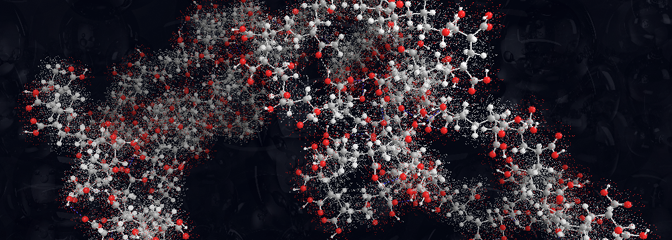

Chain-Extendable Crosslinked Hydrogels Using Branching RAFT Modification

Chain-Extendable Crosslinked Hydrogels Using Branching RAFT Modification

We are delighted to announce publication of new work incorporating our branching chain transfer agent into crosslinked hydrogels, to produce novel functional materials. The full manuscript is available open access on MDPI Gels.

Abstract:

Functional crosslinked hydrogels were prepared from 2-hydroxyethyl methacrylate (HEMA) and acrylic acid (AA). The acid monomer was incorporated both via copolymerization and chain extension of a branching, reversible addition–fragmentation chain-transfer agent incorporated into the crosslinked polymer gel. The hydrogels were intolerant to high levels of acidic copolymerization as the acrylic acid weakened the ethylene glycol dimethacrylate (EGDMA) crosslinked network. Hydrogels made from HEMA, EGDMA and a branching RAFT agent provide the network with loose-chain end functionality that can be retained for subsequent chain extension. Traditional methods of surface functionalization have the downside of potentially creating a high volume of homopolymerization in the solution. Branching RAFT comonomers act as versatile anchor sites by which additional polymerization chain extension reactions can be carried out. Acrylic acid grafted onto HEMA–EGDMA hydrogels showed higher mechanical strength than the equivalent statistical copolymer networks and was shown to have functionality as an electrostatic binder of cationic flocculants.