We are delighted to announce important new work on our bacteria binding system has been published on the Royal Society of Chemistry’s Journal of Materials Chemistry B – part of their special collection on the Targeted Biomedical Application of Nanomaterials. This work by Thomas Swift, Steve Rimmer and Maria Katsikogianni shows an evolution of our understanding of the polymer desolating materials that underpin our rapid diagnostic technology. The article is open access and free to read for anyone on the RSC website.
Read moreopen access
Polymer conformation determination by NMR spectroscopy: comparative diffusion ordered 1H-NMR spectroscopy of poly(2-ethyl-2-oxazoline)s and poly(ethylene glycol) in D2O
We are delighted to announce the next publication of work we have done in collaboration with Professor Richard Hoogenboom, at the Universtiet Ghent, to study Poly(alkyl oxazoline) materials. This work outlines the use of DOSY to extra solution properties of polymers with variable temperatures – and is freely available on the Royal Society of Chemistry’s website.
Read more
Evaluating the Irritant Factors of Silicone and Hydrocolloid Skin Contact Adhesives Using Trans-Epidermal Water Loss, Protein Stripping, Erythema, and Ease of Removal
We’re delighted to announce a last minute publication to close out the year of 2023! Our work on silicone skin adhesives, following a long initial collaboration with Trio Healthcare, has been published in ACS Applied Bio Materials, and is available open access for you to read as of December 27th 2023 on the ACS website!
Abstract:
A composite silicone skin adhesive material was designed to improve its water vapor permeability to offer advantages to wearer comfort compared to existing skin adhesive dressings available (including perforated silicone and hydrocolloid products). The chemical and mechanical properties of this novel dressing were analyzed to show that it has a high creep compliance, offering anisotropic elasticity that is likely to place less stress on the skin. A participant study was carried out in which 31 participants wore a novel silicone skin adhesive (Sil2) and a hydrocolloid competitor and were monitored for physiological response to the dressings. Trans-epidermal water loss (TEWL) was measured pre- and postwear to determine impairment of skin barrier function. Sil2 exhibited a higher vapor permeability than the hydrocolloid dressings during wear. Peel strength measurements and dye counter staining of the removed dressings showed that the hydrocolloid had a higher adhesion to the participants’ skin, resulting in a greater removal of proteins from the stratum corneum and a higher pain rating from participants on removal. Once the dressings were removed, TEWL of the participants skin beneath the Sil2 was close to normal in comparison to the hydrocolloid dressings that showed an increase in skin TEWL, indicating that the skin had been highly occluded. Analysis of the skin immediately after removal showed a higher incidence of erythema following application of hydrocolloid dressings (>60%) compared to Sil2, (<30%). In summary, this modified silicone formulation demonstrates superior skin protection properties compared to hydrocolloid dressings and is more suitable for use as a skin adhesive.
Chain-Extendable Crosslinked Hydrogels Using Branching RAFT Modification
We are delighted to announce publication of new work incorporating our branching chain transfer agent into crosslinked hydrogels, to produce novel functional materials. The full manuscript is available open access on MDPI Gels.
Abstract:
Functional crosslinked hydrogels were prepared from 2-hydroxyethyl methacrylate (HEMA) and acrylic acid (AA). The acid monomer was incorporated both via copolymerization and chain extension of a branching, reversible addition–fragmentation chain-transfer agent incorporated into the crosslinked polymer gel. The hydrogels were intolerant to high levels of acidic copolymerization as the acrylic acid weakened the ethylene glycol dimethacrylate (EGDMA) crosslinked network. Hydrogels made from HEMA, EGDMA and a branching RAFT agent provide the network with loose-chain end functionality that can be retained for subsequent chain extension. Traditional methods of surface functionalization have the downside of potentially creating a high volume of homopolymerization in the solution. Branching RAFT comonomers act as versatile anchor sites by which additional polymerization chain extension reactions can be carried out. Acrylic acid grafted onto HEMA–EGDMA hydrogels showed higher mechanical strength than the equivalent statistical copolymer networks and was shown to have functionality as an electrostatic binder of cationic flocculants.
Peristomal Skin Complications: New Materials Needed to Ease the Ostomy Care Market
We were invited to provide a commentary on a new article in the British Journal of Dermatology, regarding the need for stomal skin adhesives less intrusive on the peristomal area.
Read more
Interfacial Cocrystallization Using Oily Phase via Liquid–Liquid Phase Separation
We are proud to announce our collaborators Dr Paradkhar have published a new article in the journal Crystal Growth and Design on oily phase separation to remove impurities from cocrystals. The full article can be read here at the publishers website.
Read more
Zirconium-Based MOFs and Their Biodegradable Polymer Composites for Controlled and Sustainable Delivery of Herbicides
Our collaborator Sanjit Nayak has published with Maria Katsikgoianni and others an article in ACS Applied Bio Materials on the use of MOFS in biodegradable polymer composites for herbicide delivery. The article is available open access here
Read more
Generation and use of functionalised hydrogels that can rapidly sample infected surfaces
We are delighted to announce the release of a methods paper outlining the preparation and use of our triple modified PNIPAM gels for bacteria swabbing of infected surfaces.
Read more
Evaluation of ligand modified poly (N-Isopropyl acrylamide) hydrogel for etiological diagnosis of corneal infection
We are proud to announce the publication of work alongside our collaborators at L V Prasad Eye Institute and the University of Sheffield. This paper outlines our recent funded project from the Wellcome Trust to develop analytical devices to detect corneal infections, providing a rapid test for isolation of gram negative, gram positive or fungal pathogens.
Read moreLabel-Free Electrochemical Sensor for Rapid Bacterial Pathogen Detection Using Vancomycin-Modified Highly Branched Polymers
A new publication has been released by our collaborators at the University of Edinburh and IIT Delhi. This paper outlines an electrochemical sensor for pathogen detection using our highly branched polymers and is available to read for free (open access) at MDPI here!
Read more
Fluorescence Spectroscopy Analysis of the Bacteria–Mineral Interface: Adsorption of Lipopolysaccharides to Silica and Alumina
We’re delighted that we have just published an article in the journal Langmuir. This study, written by Fateh El-Taboni, Emily Caseley, Maria Katsikogianni, Linda Swanson, Thomas Swift and Maria E. Romero-González reports our work on studying Liposaccharide’s produced by bacteria in the formation of biofilms. The full paper can be read at the journal Langmuir
Read more
Highly branched poly(N-isopropyl acrylamide) functionalized with an inducer molecule suppresses quorum sensing in Chromobacterium violaceum
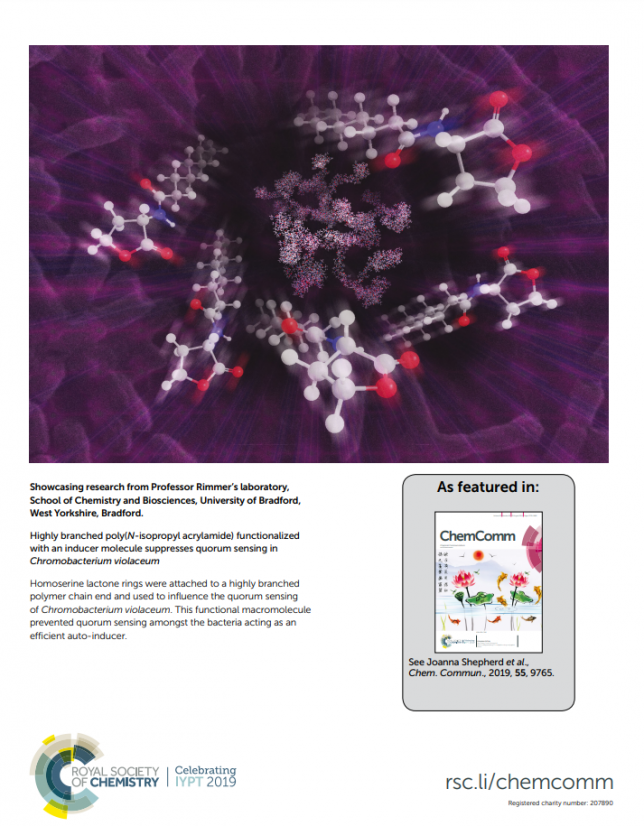
A new paper showcasing our collaborative work with Dr Shepherd in the University of Sheffield has just been published in ChemComm. This work, writing by Joey Shepherd, Tom Swift, Chien-Yi Chang, James R Boyne, Stephen Rimmer and William Martin showcases how HB-PNIPAM-HL can act as a quorum sensing antagonist and modulate how bacterial organisms communicate with one another.
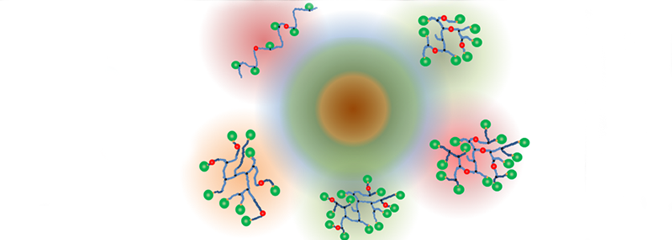
Highly-branched poly(N-isopropyl acrylamide) functionalised with pendant Nile red and chain end vancomycin for the detection of Gram-positive bacteria
We are delighted to announce a new publication released today is our latest work in the area of bacterial diagnostics. We have attached Nile Red as a pendant dye to our highly branched PNIPAM polymers to create a diagnostic infection sensor, and our latest results are published in Acta Biomateriala.
Read moreA muscle mimetic polyelectrolyte–nanoclay organic–inorganic hybrid hydrogel: its self-healing, shape-memory and actuation properties
A new paper has been published today in the Royal Society of Chemistry purchased Journal of Materials Chemistry B. This paper is the second following the visit from Sovan Banerjee from IIT Kharagpur to Bradford in 2016 and we are delighted that our collaboration with Prof Singha’s group is continuing to bear fruit.
Read the full paper at the J Mat Chem B website here.
Read more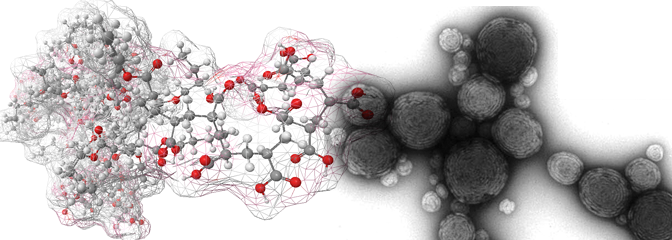
Highly-ordered onion micelles made from amphiphilic highly-branched copolymers
The Royal Society of Chemistry has just published our latest work; a collaboration between University of Bradford, University of Sheffield and Domino UK ltd. This paper, written by Dr Sarah Canning, with Professors Rimmer and Geoghen, shows the use of block poly butyl-methacrylate-co-acrylic acid to create uniform, onion forming micelles at the nanoscale.
Read more