Chemistry support as life science technician at the University of Bradford [2016-2017]
Chemistry support as life science technician at the University of Bradford [2016-2017]
Today online a new advanced access article is online at Biomaterials Science, launched following our recent collaboration with the team at the University of Sheffield. This paper shows the efficacy of our recent highly branched polymer materials to disturb or prevent the formation of bacterial biofilms.
Published online as early access today, a brand new communication has been published in Macromolecular Rapid Communications, by Dr Swift and collaborator Dr Hickey. This article shows a first examination of the interaction between gold nanoparticles and linear PNIPAM polymer chains and can be read at the MRC website here.

We are delighted to publish the first of several collaborations with our colleagues in IIT Kharagpur has been accepted for publication with RSC journal Polymer Chemistry. This publication, outlining a self healing fluorescent hydrogel, is a functional demonstration of new material types we have been actively developing for several years. Read the article at the RSC Polymer chemistry website.
Our colleagues in the Geoghegan group at the University of Sheffield have just published a detailed analysis of our highly branched polymer systems using neutron scattering, and neutron spin echo, techniques. This very interesting paper, written with the collaboration of Professor Rimmer, has just been published in Soft Matter.
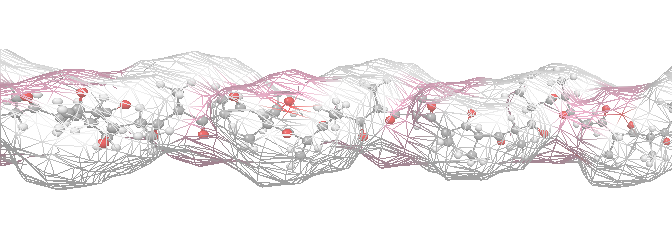
Lecturer in Theoretical and Computational Chemistry [2018 – ] https://orcid.org/0000-0003-1455-8462

Today we were delighted to hear from RSC Soft Matter that they are publishing one of our articles on “Polyacrylic acid interpolymer Complexation”. This paper is written by Drs Thomas Swift, Colin Seaton and Stephen Rimmer, and can be found at the Soft Matter website. This is the latest in a series of articles studying interpolymer complexation carried out by the group in recent years.

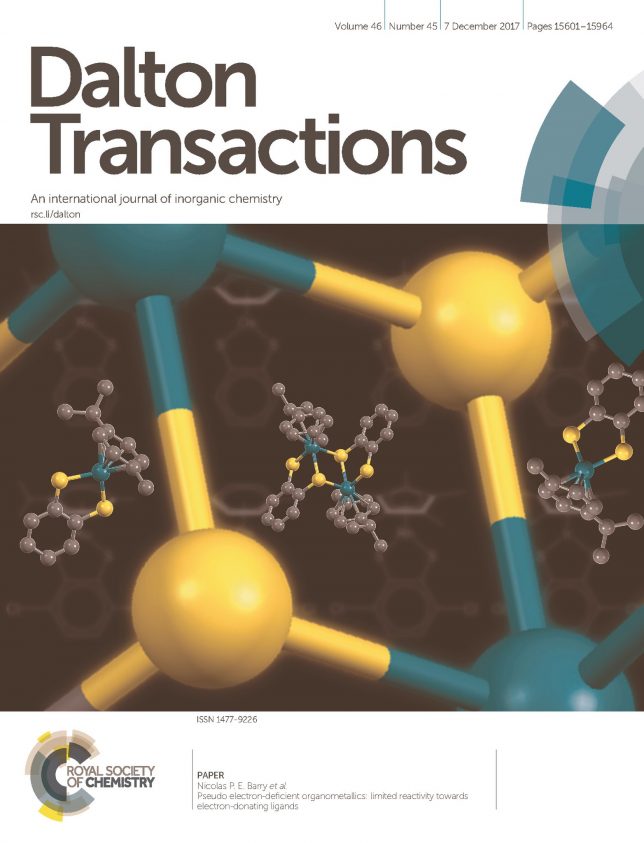
Our colleagues in the Barry and Lord groups at the University of Bradford have just published a paper on electron deficient inorganic complexes, with the assistance of our own Doctor Swift. The paper is available to read now at Dalton Transactions.
Doctor Thomas Swift will be representing the Polymer Biomaterials group at this years international Polymers for Advanced Technologies, hosted at the University of Manchester.
Doctor Swift will present some of the recent work on Poly(acrylic acid) carried out by the group, focusing on our recent discovery about its molar mass dependency.
Find out more about the PAT conference here.
Dr Thomas Swift is providing a presentation at the 18th RAPS meeting in
His talk is titled ‘ Scavenge and Respond – A look at Supramolecular Binding of Polymer Systems’ and focuses on his recent work on interpolymer complexation.
 Doctor Thomas Swift will shortly be presenting his work in Leeds on the 4th of September at a free event at the University of Leeds.
He will be presenting results from his recent paper on Hydrogen Bonding Systems, and the beautiful lie.
Register for free at the conference at their website here.
ACS Biomacromolecules has just announced the upcoming publication of our latest piece of research, a collaboration between Thomas Swift, Stephen Rimmer and Richard Hoskins from University of Bradford and Joey Shepherd, Pavintorn Teratanatorn, Ian Douglas and Sheila MacNeil from the University of Sheffield. This paper, available now from the Biomacromolecules website, shows our latest work in disclosing bacteria/polymer binding and further development towards a colorimetric sensor.
 Doctor Thomas Swift, Maria Katsikogianni and Professor Rimmer are all presenting at the Polymer IRC this July.
Professor Rimmer will deliver a keynote speech on Highly branched poly(N-isopropyl acrylamide) for tackling antimicrobial resistance whilst Doctors Swift and Katsikogianni will be giving short oral presentations on harnessing nano-patterning and incorporation of antimicrobials to manufacture orthopaedic trauma implants and Polymer Characterisation.
Find out more about this conference here.
We’ve just received news from our collaborator Sebastian Spain, from the University of Sheffield, that a paper written by group alumni Laura Shallcross, detailing work that started when she was with us, has been published by the Royal Society of Chemistry, Journal of Materials Chemistry B. The full text can be found at the RSC website.
We have just published brand new research into interpolymer complexation, work carried out by Thomas Swift, Stephen Rimmer, Maria Katsikogianni, Natalie Paul and Linda Swanson. This work can now be found online at Science Direct.